Sunday, July 3, 2011

3rd Annual Cheesecake USA Machinima Tribute

Happy Fourth from Sonicity

The old adage is a picture is worth a 1000 words.   So I suppose a video falls within that category to some extent, as a moving image.  This is my third annual Fourth of July CHEESECAKE Virtual Tribute Video.  You might argue whether or not you consider this worthy of viewing, and I would not debate you on that.  But I would add, always be sure to have fun with your tools.

Media making should be fun, and sometimes you just have to play.  If you love media, you will breathe life into all you do.   My biz partner, Lowe Runo, and I recently completed the book, Machinima (due out later this year) - and you know what - I needed a break!!!   I didn't go anywhere this holiday, no exotic travels not even in SL, but I had a good time filming my friends and editing, and I feel all the better for it.

This machinima is merely intended as a fun video of celebration of good times with friends.  Pushing aside politics for a weekend, and economc woes, and definitions on the art and practice of machinima , I am merely focusing on the fact that it is the USA's birthday weekend.   This is how I choose to celebrate the Fourth of July.  I hope you smile a bit, and maybe think "What if - what if - I did a silly video with my machinima skills.  Do I dare?"    My lesson in this column - never forget how to have fun with media, no matter if it is machinima, radio, photography, etc.

Catch my TRIBUTE MACHINIMA on FLICKR.  And Happy Fourth of July to Americans whereever you are.  And to the rest of the world, may you find something special in your life every day.

Sonicity


Forthcoming, Machinima: The Art & Practice of Virtual Filmmaking (McFarland, Fall 2011) by Sonicity Fitzroy and Lowe Runo (Forward by Persia Bravin). The Professional Machinima Artist Guild graciously provides syndication of Sonicity’s blog Magnum: The Machinima Review to Aview.TV/Sonicity/

Thursday, June 30, 2011

Happy Happy Rez Day, Lowe Runo

A tribute to Lowe Runo, founder of the Professional Machinima Artist Guild and the Second Life Machinima Artist Guild.


You say it's your rez day.  Whoot!  Whoot!
Saying Happy 5th Rez Day to Lowe Runo, of Lowe Runo Productions LLC.  As you most likely know, Mr. Runo is my book co-author and biz associate in the machinima and media world.

We just learned today from our publisher that our book cover has been completed! That's a nice surprise for Lowe on his special day!

http://www.mcfarlandpub.com/book-2.php?id=978-0-7864-6171-4


:)  Soni


BTW, here's Lowe's thank you video to all his friends, a reflection of his five years in SL.
-------------
Forthcoming, Machinima: The Art & Practice of Virtual Filmmaking (McFarland, Fall 2011) by Sonicity Fitzroy and Lowe Runo (Forward by Persia Bravin). The Professional Machinima Artist Guild graciously provides syndication of Sonicity’s blog Magnum: The Machinima Review to Aview.TV/Sonicity/

Wednesday, June 22, 2011

Virtual Success for the 3rd Annual MaMachinima Festival


Once again, producers, performers, and supporters gathered together for a world-wide screening of machinima in all its forms.  The MaMachinima Festival ran Saturday, June 18 to Sunday, June 19 (Friday/Saturday, RL) in Second Life at The Linden Endowment of the Arts Theatre.   This screening is extremely critical in that it celebrates the depth and breadth of machinima, in all its styles and production platforms.   Chantal Harvey (above), founder and CEO of the MaMachinima International Festival (MMIF), is instrumental to the coordination of this real life, real time event in Amsterdam as well as in Second Life.   Amsterdam, as a RL mecca for machinima, has become pivotal as a location for the annual screenings, with Chantal having worked as a filmmaker there during her career.  

But also this festival speaks to the artistic potential of the film form, machinima in and of itself, given that Northern Europe has had a long tradition of forwarding art through new technologies.  Overall, more than 50 short films were featured.  The producers came to center stage to discuss their motivations behind their machinima stories and their technology practices to their fellow filmmakers and viewers internationally.   


It was good to see machinimists Phaylen Fairchild, Pooky Amsterdam (and her associates), Toxic Menges, Al Peretz, AnimaTechnica Ataro Asbrink, Cecil Hirvi, jjcc coronet, Flimsey Freenote, Hypatia Pickens, Kate Fosk, Larkworthy Antfarm, spyVspy Aeon, and others on stage and/or among the filmmakers in the audience.  


I attended, along with Machinima Artist Guild Founder Lowe Runo, to see the works of so many good and talented people who have helped to mature the art and practice of machinima, and in doing so we hoped to pay tribute to those who contributed to our forthcoming book on machinima this fall.   


 The MMIF was a virtual feast of all genres of machinima, showcasing hours of films made through Second Life, but a significant portion of the festival was dedicated to those machinima made through Moviestorm and iClone.    The audience loved it all - no matter the platform!


MMIF is a reference point for those interested in machinima filmmaking.  The selections capture the range of machinima’s potential as a technology and storytelling agent. So many stories came to life during the festival, projected on the big screens within the beautiful LEA dome theater as the viewers immersed themselves into the visual treats before them.    

 Breathtaking and credible, to hilarious and engaging, so much talent in one room – thanks Chantal and your crew for making this possible.  I have no reservations saying, "no Buts about it, a wonderful event" - once again!!!


And special thanks to Aview.TV founder for being supportive of machinima.


For more information about the annual event and other machinima activities sponsored  by Chantal Harvey, refer to the organizational site at http://MMIF.org.

Kudos to all involved!  Look for more pics in the July issue of Best of SL Magazine :)  Soni

Forthcoming, Machinima: The Art & Practice (working title, McFarland, 2011) by Sonicity Fitzroy and Lowe Runo. The Professional Machinima Artist Guild graciously provides syndication of Sonicity’s blog Magnum: The Machinima Review to Aview.TV/Sonicity/

Saturday, June 4, 2011

First Ladies of Lighting: The Original Windlighters

Jennifer Tipton is one of the First Ladies of Lighting.  I am not talking about the invention of electricity or any gadget.  Tipton, as one of the first women light designers, found a way to fuse fog and light in a brilliant manner to set the stage ablaze.   I am honoring a woman who is internationally renowned in her field of expertise - lighting for the stage, studio and dance.  Although she has no affiliation with Second Life, to me, she is one of the original windlighters.  Let me explain...

We rarely think what's behind the magic of cinema.  Magic - in all its broadness and derivatives - is the idea behind this year’s Second Life 8th Anniversary beginning June 21st.  Second Lifers, in particular, are so accustomed to technology and special effects that we take magic for granted.   


Women in the Spotlight
The history of lighting is a fascinating study, and it is amazing to hear the stories of those early women pioneers in lighting such as Loie Fuller (1852-1928) and Jean Rosenthal (1912-1969).  It is both AMUSING and AMAZING to see the magic behind what was accomplished so long ago for what we can do now much more easily with computer technology.   Yet, I venture to say some of their tricks are relevant today, and it is always good to learn from the masters of the trade.  For now, however, I must press forward with a bit about another talented woman of light, Jennifer Tipton.   For more about Fuller and Rosenthal, go to The Light Fantastic.

Why Ms. Tipton? 
I was invited to write several entries for The Multimedia Encyclopedia of Women in Today's World.   I am a professor, so that is what I do sometimes.  Occasionally I come across a fascinating individual, and the project takes on new meaning.  I begin to see parallels in their career with other media makers and innovators of technology.    Tony Award winner Jennifer Tipton was my assignment, among other leading ladies of media.   Tipton’s talent in lighting is well known in the worlds of dance, opera and theater.   

Think The Nutcraker for stage and television, then think The Paul Taylor Dance Company, The Metropolitan Opera, the American Ballet Theatre, and so forth, and you will begin to understand how accomplished she is as a lighting designer.    She is known for her use of color and ability to make lighting breathe and dance on stage and film.   She has more than once stated that light is visual music.   It is no surprise then - that now 73 - she is also renowned for her lighting expertise in multimedia interactive performances.  She recently worked with Indonesia artist/dancer Sardono W. Kusmono.


White Magic
Next time you see white light and machine fog envelope a stage or a scene in a movie, think of Ms. Tipton.  In her case, she sought a way to cloak the entrance and exit of the dancers on stage.   Believe it or not, it was a revolutionary application of an existing technology, and it was used In The Upper Room (1986), performed by The American Ballet Theatre at New York City’s Center:


“The dancers are invisible until they are picked out by Tipton's precise, razor-sharp lighting. It's a simple effect, familiar to anyone who has driven a car on a foggy night,” explains art columnist Michael Bierut.  He continues, “[I]n the hands of this brilliant designer the results are as mesmerizing…dancers seem to materialize out of nowhere before your eyes every few seconds. Tipton's lighting is the kind of magic that delights you even when you know how exactly the trick works.”


It is not a matter of unleashing smoke across a space; it is the talent to be able to craft it within the lighting design.  I am not crediting her for creating the smoke machine but merely illustrating here how she thought out of the box – and how lighting can be crafted within an environment.  By the way, the first fog machine was introduced in 1979, with little history to be found on the inventor.  Lighting has always been a bit of trickery among the best lighting designers.


Mood Lighting
To Tipton, light is an emotional experience, and she is able to sense it like one would hear music.   That is her analogy, not mine. She has trained many of the prominent lighting designers, and won the MacArthur Foundation’s Genius Award and the Dorothy and Lillian Gish Prize for her exceptional skills and passion in her field.   She became intrigued by lighting during college, and it was a path few take, and perhaps it seemed less glamorous to many who would prefer center stage. Yet she caught the attention of the world, and made a career out of a road less traveled. 

Future Lighting Designers
It is something to think about as machinima filmmakers.  What might you contribute to the field of machinima?  Sometimes we get caught up wanting to be the producer or the talent, but in reality there might greater talents within us – if we consider what we really like about the process of making a film or bringing a theatrical event to life.    What is it that we enjoy most about watching and producing a film or live production: is it the sound, lighting, costumes, writing, animations, etc.? 


Tipton has prepared countless students on the magic of lighting at the Yale University School of Drama, but remains active in her profession.   Simply put, you might say that Jennifer Tipton still lights up the stage, the studio and the world.  

Further Readings
Acclaimed Theater Lighting Designer Jennifer Tipton to be honored with the 2001 Dorothy and Lillian Gish Price, http://gishprize.com/pdf/2001_tipton.pdf


Bierut, Michael. Designing Twyla Tharp’s Upper Room. The New Design Observer, November 6, 2005, http://observatory.designobserver.com/entry.html?entry=3797

Jennifer Tipton. MacArthur Fellows. Mac Arthur Foundation, September 2008, http://www.macfound.org/site/c.lkLXJ8MQKrH/b.4537293/


Stoudt, Charlotte.  Jennifer Tipton lights up REDCAT, and many other stages.  Los Angeles Times, Entertainment, September 11, 2010, http://latimesblogs.latimes.com/culturemonster/2010/09/jennifer-tipton-at-redcat.html


The light fantastic - Fuller, Rosenthal & Tipton: beginning with Loie Fuller in the nineteenth century, dance has pioneered the development of twentieth-century stage lighting, http://www.thefreelibrary.com


http://wn.com/Jennifer_Tipton (Jennifer Tipton interview video)


Photography by Sonicity, and thanks to model Bel Barnes for helping out with the shoot. 


Until next time....
:) Soni


Forthcoming, Machinima: The Art & Practice (working title, McFarland, 2011) by Sonicity Fitzroy and Lowe Runo. The Professional Machinima Artist Guild graciously provides syndication of Sonicity’s blog Magnum: The Machinima Review to Aview.TV/Sonicity/

Monday, April 25, 2011

Monsters, Fairy Tales & The Magic of Machinima


Off-to-grandma's-house as we go for another round of machinima chit-chat. Not that I am grandma, haha, rather I must give credit where it is due. I rely on the collective wisdom of those who have influenced me through the years, and of late as Lowe Runo and I have spoken to so many on the subject in the writing of our book. As I promised last round, in this blog I focus on the work of wordsmith and cinematographer Toxic Menges, an artist and storyteller of filmmaker John Alton’s standards, who experiments with the virtual potential inside Second Life to achieve quality machinima with minimal post production. First let me set the stage for her work, by offering some context.

You remember the buzz around the major motion picture Red Riding Hood (2011), starring Amanda Seyfried, and based on the screenplay by David Leslie Johnson. The movie takes the classic tale for a cinematic spin on the big screen. I have to give credit to my “author” dad for passing along some conceptual wisdom: the best story ideas are those that take a “classic plot” and make a twist to it – the setting, the characters, the events all become variables in designing the audience’s cinematic ride. It is fairly much common sense advice (dog bites man vs. man bites dog), but it is worth some thought. Begin this way: we take one element and think what if we did this instead, what then?

If you are into the ZOMBIE movie mania, maybe just play around with the concept of the undead. What about Little Red Riding as a Zombie?

Or, then what about werewolf zombies in the ‘hood. Maybe, Little Red goes to the Big Apple (just think Wil Ferrel in Elf). Okay-Okay-you get the idea.

Sometimes it works, sometimes not (and it might be well received by some viewers and not others, as in the case of the Twilight series (vampires, werewolves, etc. as romantic icons, say what?). I, personally, lean toward Lost Boys and Dust to Dawn and would warn my children against romantic encounters with any of the living dead. Oh btw, on that note, watch Aaah Zombie - love the make-out scene between zombies (below is the shot from the couple's perspective, but the next scene shows them as lover zombies at a crowded bowling alley).

View ImageView Image

The plot is from the zombie’s perspective, and if nothing else, the movie has been applauded by reviewers for giving zombies a voice on screen. The movie gets trite after 30 minutes, but the concept is different.

In the case of the 2011 Red Riding Hood, it tried too much, and overall flopped. Director Catherine Hardwicke had a difficult task at hand of taking an old formula and making it fresh in a relatable way. Film critic Robert Ebert came down hard on the film and it didn’t fare well among audiences. But alas, this is the risk when you take a familiar concept and mess with it. The reason that I bring all this up is to draw parallels to machinima, especially those films that arise from within immersive virtual environments.

In the case of Toxic Menges’ machinima version (September 2010 release) of the storybook classic, Little Red Riding Hood, her tale offers a unique perspective, not only in the storyline and dialogue (a tongue-in-cheek romp through the virtual woods, like heard in the open: “Hey sexy woodsman, I am kind of in the market for some wood. You want to meet me at our normal place, baby,” says Red), but its visual magic, presented in glorious color and vivid texture, is seen in her ability to deliver an amazing set design and animate the action creatively (you gotta love that rotating ball during the chase scene). In a recent interview, Menges told me that she uses minimal post production, and achieves nearly all her titling and effects within Second Life. She is definitely on the cutting edge of realizing the potential of virtual filmmaking in SL’s cinematic friendly interactive, immersive 3-D environment.



So-maybe-the-morale of this column is machinima continues to be a wonderful cinematic avenue for experimentation, and respected increasingly among audiences, filmmakers and reviewers for its encouragement of artistry. It is not just a twist of the plot, but that is critical; it is the willingness to twist and turn systematically and not so systematically all or some or maybe just one of the elements involved in filmmaking, and that includes considering how a story idea might take on a new reality/perspective when created in a virtually constructed environment.

From fairies to zombies, the retelling of classic tales through machinima can offer audiences that often needed/desired “twist” to catch their interest and keep them engaged. The cinematic perspective should cater to our human emotion as well as our twisted and wonderful imaginations. On that note, I make brief mention of an upcoming motion picture Dylan Dog: Dead of Night, debuting Friday, April 29th. It was released in Italy on March 16, 2011. Dylan Dog is based on the dark Italian comics series (1986) set in London, and its cinematic interpretation maintains the idea that the main character is a detective who solves paranormal cases. His assistant is a zombie. Some tales never go away, but it is how they are reinvented on paper and screen that gives them new life. Machinima is as much an art form as the storybook, comic book, and the graphic novel, and as much as we want to create cinematic realism through this medium, we lest not forget to embrace its imaginative potential to takes us beyond mere capture into the world of ultimate creation.

Machinima as a choice in filmmaking brings its own challenges and rewards to storytelling – it offer us sometimes innovative ways to express and experience those timeless tales. As I close out, note in the references, a link to PsychoFlounder’s machinima trailer, The Beginning of the End, created through Garry’s Mod. Filmmaking choices even between machinima platforms do make a difference to your final look, conceptually and technically.


Reference Links:

Aaah Zombies (2007), review, http://www.bloodygoodhorror.com/bgh/reviews/09/20/2010/aaah-zombies-wasting-away

Ebert, Roger (2011), http://rogerebert.suntimes.com/apps/pbcs.dll/article?AID=/20110310/REVIEWS/110319996

Menges, Toxic (2010). Little Red Riding Hood, http://www.youtube.com/watch?v=p5zZ6_RPYIg

PsychoFlounder (2011), The Beginning of the End, http://www.youtube.com/watch?v=XBXS2shdRQ4&feature=player_embedded

Garry’s Mod, info site, http://store.steampowered.com/app/4000/


Forthcoming, Machinima: The Art & Practice (working title, McFarland, 2011) by Sonicity Fitzroy and Lowe Runo. The Professional Machinima Artist Guild graciously provides syndication of Sonicity’s blog Magnum: The Machinima Review to Aview.TV/Sonicity/

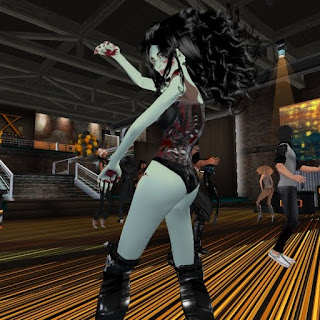
Note: Photos of Sonicity taken at Club Nine's first anniversary, April 26, 2011, courtesy of owner Umberto Giano.


Tuesday, March 15, 2011

Painting with Machinima

the-$10,000-Linden Question-of-the-day is: What does it take to complete a book on the aesthetics and practice of machinima? Hmmm, let’s see, at least a year of solid research, and many more years of professional experience in media making - not just from authors Lowe Runo and Sonicity Fitzroy, but the larger machinima community.

Machinima is unique, but its makers do draw from other media practices. Then of course there are various perspectives from the machinima community, and it becomes difficult to include them all as well as all platforms.

So many talented people were not included in our book, and partly it had to do with their commitments at the time when we made a general call for machinimatographers and their supporting community. Yet many did contribute to the making of Modern Machinima: Aesthetics and Practice in Game and Virtual Filmmaking. The manuscript now awaits the first round of review by the publishers and the process continues through the summer months, with a Fall 2011 release scheduled.

After many draft rounds, and with the authors realizing the diversity of platforms and methods in making machinima, we decided it was best to focus on the transformation of an idea to machinima – the story or vision that drives the work, by (1) contextualizing machinima within the schools of thought and practice within cinema, television and animation (all with rich histories), (2) underscoring the essence of storytelling that runs through virtually every machinima project, and (3) inviting producers, actors, educators, artists, broadcasters and so forth to share their expertise and experiences.

A series of roundtables were administered through Lowe Runo Productions, LLC, to provide an open forum to guide the authors, and those views often found their way into the text of the book. It was certainly an inclusive process, and as a result the book is stronger for it. It tends to lean toward those interactive, immersive, massive multi-player gaming platforms, like Second Life, War of Warcraft, and The Sims, while acknowledging the larger historical practices of other game engines.

The book brings together my perspective as a media maker, particularly one who dwells within sound, and my co-author’s expertise in the crafting of still and motion images. He also loves to blow up things and I do think the chapters on sound and post-production exemplify our respective interests. On the other hand, every machinima needs a theme of some sort that entices the viewer to watch, and to continue watching. That is the heart of machinima. The pulse may vary among producers, with some works more reflective at times, and others that sweep you off your feet and barely let you catch your breath.

And some machinimatographers would likely make John Alton proud, ascribing to his classic Painting with Light (1949), one of the first books written on cinematography. Alton was a renowned cameraman who could tell a story through lighting. Alton is known for his film noir lighting in American in Paris, among other films. He broke all the rules and challenged directors to look beyond available technologies and techniques to light the story by first visualizing it. Alton painted first with his imagination, and then he sought ways to arrange the set and characters to tell the story. He challenged the conventions of other technical directors. Alton approached lighting as an artist, painting a scene through color, shadows, and innovation. He was not flustered by the limitations of technology, neither should the machinimist.

Next time, I will focus on the work of Toxic Menges, an artist and storyteller of Alton’s standards, who experiments with the virtual potential within Second Life to achieve quality machinima with minimal post production.

For now, I put the main thrust of the book to rest, for further discussion when its publication draws near. I will continue to highlight the works of its contributors, as well as others – and other issues and themes that seem appropriate to achieving and exhibiting magnum machinima.

References
Alton, John. (1995/1949 orig). Painting with Light. 4th edition. Los Angeles: The University of California.

A number of machinimatographers and members of the supporting community contributed to our book as interviewees, contributing writers, and/or participants in roundtable discussions:

Contributors included: Iono Allen, Pooky Amsterdam, Larkyworthy Antfarm, Asil Ares, CodeWarrior Carling, Dr. Bryan Carter, Penumbra Carter, Decorgal, Draxtor Despres, Gene Williams, Evie Fairchild, Michael Gray, Kit Guardian, Chantal Harvey, Laurina Hawks, Phaylen Fairchild, Rysan Fall, Kate Fosk, Yani Jowisz, Alley McNally, Thinkerer Melville, moo Money, Wiz Nordberg, Toxic Menges, al Peretz, Dr. Jonathan Pluskota, Kara Trapdoor, Cisko Vandeverre, Tikaf Viper, 1angelcares Writer, Suzy Yue, and Jayjay Zifanwe - among others.


**************************************************
[Photos: Authors Soni & Lowe demonstrating green screening which ended up as a tribute video for the late Robert Palmer; Phaylen Fairchild (as a teapot, and in the midst of a production) being interviewed by Sonicity; Toxic Menges (as a horse, in the midst of production) being interviewed by Sonicity. All photos taken at Lowe Runo Productions, LLC.]

Forthcoming, Machinima: The Art & Practice (working title, McFarland, 2011) by Sonicity Fitzroy and Lowe Runo. The Professional Machinima Artist Guild graciously provides syndication of Sonicity’s blog Magnum: The Machinima Review to Aview.TV/Sonicity/

:) Soni